30th August
This came in the form of a thirteen day geography field trip to California! Despite having our work cut out scaling mountains, traipsing over moraines and burying our minds in geology there was occasionally an opportunity for me to divert my eyes to the skies to see the odd bird or two. As could be expected, there were a great deal of lifers to be had and on touching down in San Francisco, I must admit I was a little frustrated that the first species I saw were some rather familiar, Eurasian Starlings! I must admit I was hoping for something a little more exotic to kick start the trip. None the less, the coach journey out of the airport to our accommodation in the depths of Yosemite Park produced a decent selection, namely hundreds of Double-crested Cormorants, Western Gull, Brown Pelican and White Pelican all seen whilst crossing the long San Mateo bridge out of San Francisco. Turkey Vultures were also in no short supply. American Crow, Great Egret, Mourning Dove, Canada Geese and Raven soon followed along with a Swainson’s Hawk perched at the roadside.

Double-crested Cormorant

White Pelican

Mourning Dove

"real" Canada Geese

Swainson's Hawk
What struck me most was the parched, dry and drought stricken landscape, seriously depleted in water, hence the initial difficulty in finding many birds from the coach window as we sped through the countryside.
Admittedly, birding wasn't half as easy as I had anticipated. Indeed, the “exceptional drought” that the state is currently experiencing can’t be doing good things to the bird population.
31st August
Anyway, on to the next day of birding. There was no chance for a good long night’s sleep as I soon rolled out of bed early the next morning, still rather tired from yesterday’s flight. The woodland camp (Yosemite Bug, just SW from the centre of Yosemite National Park) dawned with Spotted Towhee, Western Scrub Jay and groups of Acorn Woodpeckers (chasing my first genuine native Grey Squirrel!). Californian Towhee were also hopping around the paths, Oak Titmice fed in the treetops and Ravens cronked overhead. Nashville Warbler also made a brief appearance near the dried up riverbed along with my first ever hummer, Anna’s Hummingbird! A couple more Mourning Doves were perched on the wires and some goldfinch sp’s showed distantly in the opposite bank of vegetation, a little too distant for a bins only job.

Acorn Woodpecker


Acorn Woodpeckers harrying a Grey Squirrel

Western Scrub Jay


White-breasted Nuthatch

Nashville Warbler

California Towhee

Anna's Hummingbird

chipmunk sp.


White-headed Woodpecker

Brown Creeper

Mule Deer

Hairy Woodpecker


Maripossa National Park, forgot my wide angle lens


White-throated Swift

Stellar's Jay

Brown-headed Cowbird

American Robin

Black Bears


Great Blue Heron
We were on the road yet again by mid-morning for our first day of fieldwork at Mariposa Grove National Park. Yet more Turkey Vultures and Acorn Woodpeckers graced the way as did a praying mantis sp., perched on the flagpole of the border control into the grove. Yosemite National Forest produced yet more lifers including Mountain Chickadee, White-headed Woodpecker, Brown Creeper, Hairy Woodpecker and Wilson’s Warbler whilst we walked around studying the impressive giant Sequoia trees. Confusing chipmunk sp's, Douglas Squirrel and California Ground Squirrel were all commonplace as were Mule Deer.
Next up was some spectacular scenery, Half Dome, overlooking the huge valley and the Merced River. My personal highlight, other than the awe of overlooking the gigantic surface of a solidified magma chamber, were the relatively insignificant yet equally stunning White-throated Swifts catching insects at the edge of the precipice. I must admit I was a little distracted by the Stellar’s Jay and Western Tanager that appeared out of the bushes whilst the lecturers tried their best to explain the local geology in the sweltering midday heat whilst trying to keep down that morning’s breakfast thanks to the low pressures of a high altitude.
Sitting in a traffic jam within a boiling bus wasn't all that fun on our return journey but the Brown-headed Cowbird walking alongside the road did make up for this. A short pit stop produced quite a few American Robins, Stellar’s Jays, and American Crows. The mammal highlight for the day would have to go to the much anticipated Black Bear and her two cubs which we saw on our return journey from the coach window, full credit to Ilya for first picking them out. A couple Great Blue Herons were dotted down the stream as were the occasional fleeting glimpses of what might have been Black Phoebes.
1st September
The next morning dawned just as I got outside to walk down to the dry stream bed. Willow Flycatcher was my first lifer of the day, followed by Hutton’s Vireo and Spotted Towhee. The usual California Towhee and Anna’s Hummingbirds were about the camp and before setting of for our second day in the field I clocked Song Sparrow and possible House Finch.

Acorn Woodpecker, proof it's worth getting up before sunrise

Spotted Towhee


Willow Flycatcher

Song Sparrow


Hutton's Vireo

Oak Titmouse

Anna's Hummingbird

preying mantis sp.

Raven

Dark-eyed Junco

skipper sp.

American Herring Gull

White-crowned Sparrow

Red-tailed Hawk

Brewer's Blackbird


Yellow-rumped Warbler

Wilson's Warbler


Northern Flicker
Once we finally arrived at our accommodation at Convict Lake, I squeezed in a brief wander around the log cabins. American Robin, Black-billed Magpie and yet more Mule Deer were easy to come by, as were Wilson's Warbler and my first dendroica, Yellow-rumped Warbler! This was followed shortly by an absolutely stunning Yellow Warbler!! Although I didn't bring my scope with me, it wasn't a regrettable decision as it gave me the opportunity to try and photograph most of the species I encountered although it did mean I couldn't ID some distant prob Northern Rough-winged Swallows and a gull sp. at the lake. The day finally drew to a close with California Towhee and another big target species under the belt, Northern Flicker.
2nd September
A walk up to Convict Lake the following morning produced Yellow Warbler, Wilson's Warbler, and another lifer, Red-breasted Sapsucker followed by yet another lifer, Cooper's Hawk. I was equally thrilled to set eyes on yet another major target species, Clark's Nutcracker! The wooded areas had Mountain Chickadee, Hermit Thrush and a calling nuthatch sp. The usual Ravens, Black-billed Magpie, American Robins and Mule Deer became ever more familiar whilst additional pieces of interested include Hairy Woodpecker and distantly high up prob. Cliff Swallow.


Green-tailed Towhee
Yellow Warbler
Prickly Pear
Hermit Thrush
Clark's Nutcracker
Cooper's Hawk
Black-billed Magpie
Osprey
Orange-crowned Warbler
Brewer's Sparrow
Violet-green Swallow
dead bat sp.
no idea!
juv. Yellow-rumped Warbler
scorpion sp.
Back to the fieldwork later that morning but still kept a brief eye on the skies whilst we climbed the moraine west of our cabins. Highlights included Turkey Vultures, Osprey, Clark's Nutcracker, Ravens and American Kestrel. The other half of the day was dedicated to exploring the east moraine which (in terms of birds) produced Violet-green Swallow, Orange-crowned Warbler, pos. Brewer's Sparrow and a scorpion sp. whilst Brewer's Blackbird and Black-billed Magpie where back at the cabins.
3rd September
The day started with yet another early moring pre-sunrise walk to Convict Lake. American Dipper started the day followed by a waxwing sp. (most likely Cedar) flying over whilst trilling and Yellow-rumped Warblers adorned most of the shrubby margins. Mountain Chickadee, American Herring Gull, Green-tailed Towhee, Red-breasted Sapsucker, Wilson's Warbler and American Robin also added to the mornings encounters.
This mornings focus was on Mammoth Mountain doing progressing plant surveys down the 11,053ft mountain. The base of the mountain had Red Crossbill, Brown-headed Cowbird, Red-tailed Hawk, Dark-eyed Junco and prob. Downy Woodpecker. Our descent along the south side yeilded Yellow-rumped Warbler, Turkey Vulture, Clark's Nutcracker, Dark-eyed Junco, calling Red-breasted Nuthatch and the highlight a rather surprising ringtail Northern Harrier. A fritillary sp. also perched near the footpath affording a brief opportunity to photograph it.




The drive back produced yet more Clark's Nutcrackers, a Wood Duck, Brewer's Blackbird and a white butterfly sp. A brief walk up to Convict Lake on return to the cabins rewarded me with my first ever Monarch! Other bits and pieces included Orange-crowned Warbler, American Robin, an Osprey mobbing a Red-tailed Hawk, Yellow-rumped Warbler, Mountain Chickadee, Black-billed Magpie, Brewer's Blackbird, Yellow Warbler, a wren sp. and a hummingbird sp.
4th September
Another early morning walk around the accommodation area. Wilson's Warbler, Red-breasted Sapsucker, Northern Flicker, Mountain Chickadee and Green-tailed Towhee were all easy enough to get. A skulking warbler in the scrub turned out to be a new species, MacGillivray's Warbler and a little further afield were a feeding group of House Wrens.
Our destination for the day were the bristlecone pines, a very educational trip regarding the use of dendrochronology (ageing trees by the use of tree rings and tracking environmental conditions by comparing rates of growth). From the minibus I saw Brewer's Blackbird, Turkey Vulture, Raven, Starling, a California Quail and Monarch. Not a lot but the surrounindgs were rather barren.
At the pines themselves was a little more action and hosted American Kestrel, Pygmy Nuthatch, Cedar Waxwing and yet another Monarch. The short walk around the pines was also certainly worth the effort for the stunning Mountain Bluebird, not to mention the Clark's Nutcracker, White-breasted Nuthatch and a selection of other more regular species including Mountain Chickadee, Turkey Vulture, Red-tailed Hawk, Dark-eyed Junco and Green-tailed Towhee.
Once we arrived back in Bishop, everyone went of to get dinner. I took the brief window of opportunity, ditched dinner and went in search of my traget species, Loggerhead Shrike. This involved a brief walk through the local park which hosted Northern Flicker and a showy Black Phoebe. I finally made it to the run-down area of town, found some pastoral farmland and there... a Loggerhead Shrike sitting patiently on a prominent perch in the dusk. No sooner had I set eyes on it, a Lesser Nighthawk glided into view were it performed brilliantly at close range! To round the evening off, I also encountered a Skunk scurrying along a fence line and hide under the porch of someone's back garden. I had to jog back quickly to the minibus and although my stomach felt like an empty hole compared to the rest of my course-mates, I can certainly say skipping dinner was the right decision!


5th September
The daily early morning walk near our accommodation at Convict Lake was rewarded with Western Tanager, MacGillivray's Warbler, Orange-crowned Warbler, Wilson's Warbler, American Robin, Northern Flicker, Clark's Nutcracker, Mountain Chickadee, Brewer's Blackbird and Black-billed Magpie.
Our first group destination for the day was Inyo Crater, here I saw yet more Mountain Chickadees, Clark's Nutcrackers as well as White-breasted Nuthatch, Stellar's Jay, Yellow-rumped Warbler, Red-tailed Hawk, Dark-eyed Junco, Chipping Sparrow, American Robin and another one of my top target species, Red-breasted Nuthatch!
Moving on from Inyo Crater, we spent the remainder of the day at Mono Lake. Avian highlights included Osprey, Say's Phoebe, Least Sandpiper, Brewer's Blackbird, Sage Thrasher, Barn Swallow, Loggerhead Shrike, Lark Sparrow, California Gull, thousands of Black-necked Grebes and a probable flyover American Pipit.




6th September
Early am walk to Convict Lake: Osprey, Spotted Towhee, Wilson's Warbler, Brewer's Blackbird, Green-tailed Towhee, Orange-crowned Warbler, House Wren, Clark's Nutcracker, Red-breasted Sapsucker, MacGillivray's Warbler, Mountain Chickadee, Yellow-rumped Warbler, Yellow Warbler and lifers in the form of Sharp-shinned Hawk, Townsend's Warbler and Black-throated Gray Warbler. Seeing Douglas Squirrel again was also a pleasant encounter.
Yet another walk up to the lake later in the day for data collection: Bald Eagle, Cassin's Vireo, Raven, Black-billed Magpie, Orange-crowned Warbler, Wilson's Warbler, Hairy Woodpecker with Anna's Hummingbird and Yellow-rumped Warbler feeding on the sap coming from the holes in the bark made by a Red-breasted Sapsucker.
A third visit to the lake that same day: 2 Bald Eagles, Violet-green Swallow, Black-billed Magpie, Northern Flicker, American Robin and House Wren.


7th September
Same plan as usual, involving an early walk around the accommodation area and up towards the lake. Highlights include: Cassin's Vireo, Warbling Vireo, Townsend's Warbler, Black-throated Gray Warbler, a grossbeak sp. (most likely Black-headed Grossbeak) and commoner stuff in the form of Brown Creeper, Brewer's Blackbird, Raven, House Wren, Orange-crowned Warbler, Yellow-rumped Warbler, White-breasted Nuthatch, Black-billed Magpie, Red-breasted Sapsucker, Green-tailed Towhee, Wilson's Warbler, Spotted Towhee and American Robin.
Between survey work, I also saw the regular Bald Eagles and a Willow Flycatcher.


8th September
Species list for the day much the same as the previous ones: Anna's Hummingbird, Wilson's Warbler, Orange-crowned Warbler, Northern Flicker, Mountain Chickadee, Yellow Warbler, Great Blue Heron, Song Sparrow, Red-breasted Sapsucker, Raven, Green-tailed Towhee, Brown Creeper and less common stuff including Nashville Warbler and a calling calling goldfiinch sp. which I never managed to track down.


9th September
Starting to get used to the local species and it was becoming harder to come across any new lifers, none the less I still bagged Hermit Warbler! Other species included Cassin's Vireo, Western Tanager, Townsend's Warbler, Warbling Vireo, MacGillivray's Warbler, Song Sparrow, American Dipper, Wilson's Warbler, Yellow-rumped Warbler, Mountain Chickadee, Orange-crowned Warbler, Black-billed Magpie, Spotted Towhee, Red-breasted Sapsucker, House Wren, American Robin, Yellow Warbler and Northern Flicker. The remainder of the day produced Bald Eagle, Black Phoebe and Hairy Woodpecker.


10th Spetember
Our penultimate day in the US and with little else to do in terms of data collection or important sites to visit some of us went for a day out to the Devil's Postpile. A quick wander around the cabins before leaving produced White-crowned Sparrow, Brushtit, Western Wood-powhee, Blue-grey Gnatcatcher, Cedar Waxwing, Cassin's Vireo, MacGillivray's Warbler and the usual Green-tailed Towhee, Orange-crowned Warbler, Mountain Chickadee, Brewer's Blackbird, Yellow-rumped Warbler, Raven, White-breasted Nuthatch, Northern Flicker, Hairy Woodpecker and an American Dipper. At the Devil's Postpile species included: Turkey Vulture, Clark's Nutcracker, Brewer's Blackbird, Red-breasted Nuthatch and Mourning Cloak butterfly, Stellar's Jay, Acorn Woodpecker, White-headed Woodpecker, Yellow-rumped Warbler, Dark-eyed Junco and the highlight, a Williamson's Sapsucker!
From here we headed straight for the airport at Bishop before flying to Los Angeles to meet a connecting flight the following day back to London. A brief wander around the outside of the airport revealed House Finch and Vesper Sparrow.
Our flight took us into the late afternoon so that when we arrived at our accommodation the sun had long set. None the less, I still had a walk down to the beach but all the gulls that flew over and the waders on the beach were simply impossible to ID due to the gloom. I just had to be patient and wait until the following day.


11th September
Our final day in America and as usual an early start was essential to make the most of being by the sea. Before the sun had even had a chance to rise, I was very happy to have added yet more Brown Pelicans to the trip list as they flew southbound along the shoreline, sometimes in squadrons of over a dozen birds. Willets were another highlight and were feeding along the extensive strand line at regular intervals. Some of the beach was even designated to Snowy Plovers which were also a treat to see, particularly their acceptance into an incredibly tourist driven landscape with very very little natural undisturbed habitat. Despite being right in the middle of all the action, it was great seeing Western Gulls, Heermann's Gulls, California Gulls and a few Hudsonian Whimbrels along the beach. A small stream outlet into the beach produced a few Marbled Godwits and a short walk inland down the residential streets rewarded me with Allen's Hummingbird, Western Scrub Jay, Orange-crowned Warbler and Mourning Dove.
To round off the stay, I decided to visit the pier where I was rather surprised to see a wild California Sea Lion swimming casually around at the end collecting up scraps of fish thrown to it by the tourists, annoying fishermen in the process as it often encouraged it to go for their bait as well! A few Pelagic Cormorants also followed it around with the same intention of exploiting the easy pickings. It was a very heartening scene to see an animal I had seen throughout my childhood in captivity finally in the wild where it truly belongs.




Thank you America for the incredible experience!!!
American Dipper
Mule Deer
Chipping Sparrow
Dark-eyed Junco
Red Crossbill
Yellow-rumped Warbler
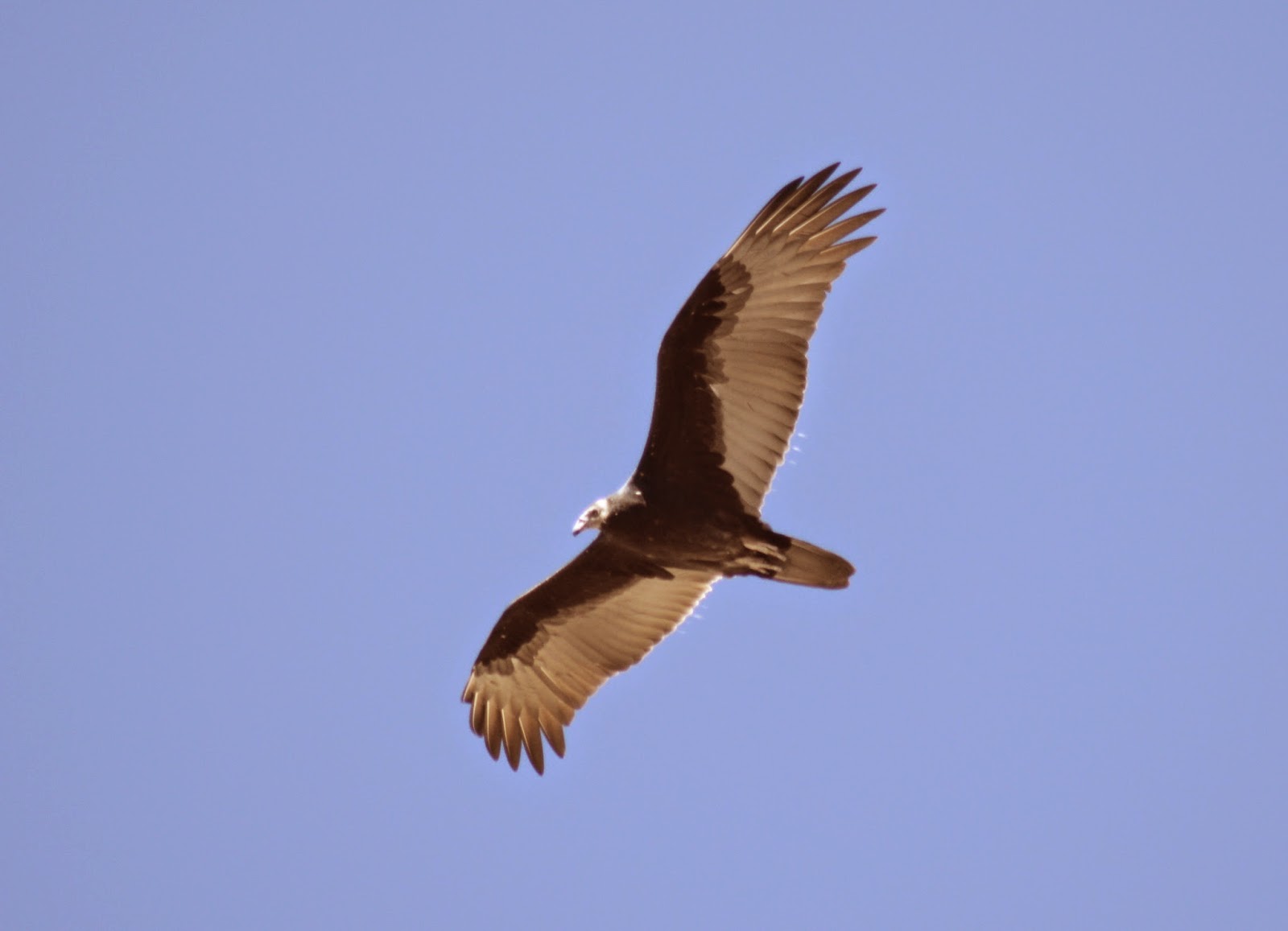
Turkey Vulture
Wood Duck (only got a brief glimpse of it as we sped past in the bus)
fritillary sp.
white sp.
The drive back produced yet more Clark's Nutcrackers, a Wood Duck, Brewer's Blackbird and a white butterfly sp. A brief walk up to Convict Lake on return to the cabins rewarded me with my first ever Monarch! Other bits and pieces included Orange-crowned Warbler, American Robin, an Osprey mobbing a Red-tailed Hawk, Yellow-rumped Warbler, Mountain Chickadee, Black-billed Magpie, Brewer's Blackbird, Yellow Warbler, a wren sp. and a hummingbird sp.
4th September
Another early morning walk around the accommodation area. Wilson's Warbler, Red-breasted Sapsucker, Northern Flicker, Mountain Chickadee and Green-tailed Towhee were all easy enough to get. A skulking warbler in the scrub turned out to be a new species, MacGillivray's Warbler and a little further afield were a feeding group of House Wrens.
Our destination for the day were the bristlecone pines, a very educational trip regarding the use of dendrochronology (ageing trees by the use of tree rings and tracking environmental conditions by comparing rates of growth). From the minibus I saw Brewer's Blackbird, Turkey Vulture, Raven, Starling, a California Quail and Monarch. Not a lot but the surrounindgs were rather barren.
At the pines themselves was a little more action and hosted American Kestrel, Pygmy Nuthatch, Cedar Waxwing and yet another Monarch. The short walk around the pines was also certainly worth the effort for the stunning Mountain Bluebird, not to mention the Clark's Nutcracker, White-breasted Nuthatch and a selection of other more regular species including Mountain Chickadee, Turkey Vulture, Red-tailed Hawk, Dark-eyed Junco and Green-tailed Towhee.
Once we arrived back in Bishop, everyone went of to get dinner. I took the brief window of opportunity, ditched dinner and went in search of my traget species, Loggerhead Shrike. This involved a brief walk through the local park which hosted Northern Flicker and a showy Black Phoebe. I finally made it to the run-down area of town, found some pastoral farmland and there... a Loggerhead Shrike sitting patiently on a prominent perch in the dusk. No sooner had I set eyes on it, a Lesser Nighthawk glided into view were it performed brilliantly at close range! To round the evening off, I also encountered a Skunk scurrying along a fence line and hide under the porch of someone's back garden. I had to jog back quickly to the minibus and although my stomach felt like an empty hole compared to the rest of my course-mates, I can certainly say skipping dinner was the right decision!
MacGillivray's Warbler
House Wren
Brewer's Sparrow
California Ground Squirrel
lizard sp.
Monarch, not easy at all getting flight shots
Cedar Waxwing, weird seeing them in scorching hot conditions at several thousand feet altitude
chipmunk sp.
Mountain Bluebird
Black Phoebe
Lesser Nighthawk, note the heavily bared inner primaries
Loggerhead Shrike
5th September
The daily early morning walk near our accommodation at Convict Lake was rewarded with Western Tanager, MacGillivray's Warbler, Orange-crowned Warbler, Wilson's Warbler, American Robin, Northern Flicker, Clark's Nutcracker, Mountain Chickadee, Brewer's Blackbird and Black-billed Magpie.
Our first group destination for the day was Inyo Crater, here I saw yet more Mountain Chickadees, Clark's Nutcrackers as well as White-breasted Nuthatch, Stellar's Jay, Yellow-rumped Warbler, Red-tailed Hawk, Dark-eyed Junco, Chipping Sparrow, American Robin and another one of my top target species, Red-breasted Nuthatch!
Moving on from Inyo Crater, we spent the remainder of the day at Mono Lake. Avian highlights included Osprey, Say's Phoebe, Least Sandpiper, Brewer's Blackbird, Sage Thrasher, Barn Swallow, Loggerhead Shrike, Lark Sparrow, California Gull, thousands of Black-necked Grebes and a probable flyover American Pipit.
Brewer's Blackbirds
Western Tanager
Pine White
butterfly sp.
California Gull
Loggerhead Shrike
Sage Thrasher
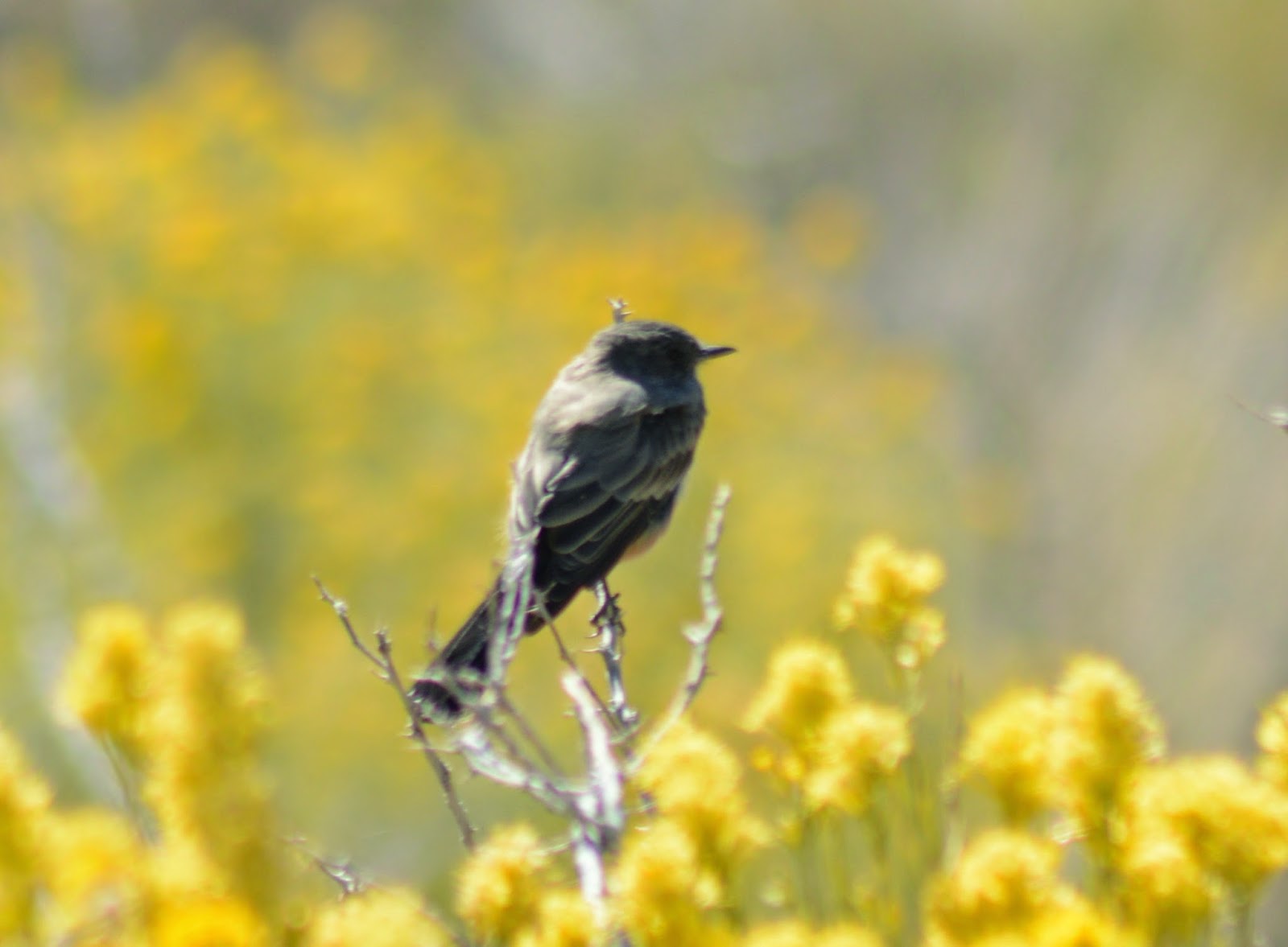
Say's Phoebe
Lark Sparrow
Least Sandpipers
Northern Flicker
6th September
Early am walk to Convict Lake: Osprey, Spotted Towhee, Wilson's Warbler, Brewer's Blackbird, Green-tailed Towhee, Orange-crowned Warbler, House Wren, Clark's Nutcracker, Red-breasted Sapsucker, MacGillivray's Warbler, Mountain Chickadee, Yellow-rumped Warbler, Yellow Warbler and lifers in the form of Sharp-shinned Hawk, Townsend's Warbler and Black-throated Gray Warbler. Seeing Douglas Squirrel again was also a pleasant encounter.
Yet another walk up to the lake later in the day for data collection: Bald Eagle, Cassin's Vireo, Raven, Black-billed Magpie, Orange-crowned Warbler, Wilson's Warbler, Hairy Woodpecker with Anna's Hummingbird and Yellow-rumped Warbler feeding on the sap coming from the holes in the bark made by a Red-breasted Sapsucker.
A third visit to the lake that same day: 2 Bald Eagles, Violet-green Swallow, Black-billed Magpie, Northern Flicker, American Robin and House Wren.
some sort of nest
Red-breasted Sapsucker
Sharp-shinned Hawk
Townsend's Warbler
Black-throated Gray Warbler
Bald Eagle fishing
Anna's Hummingbird exploiting the sap made accessible by the Red-breasted Sapsucker's work
Yellow-rumped Warbler
wasps and the like also indulging in the sugary substance
Black-billed Magpie
Cassin's Vireo
Mountain Chickadee
7th September
Same plan as usual, involving an early walk around the accommodation area and up towards the lake. Highlights include: Cassin's Vireo, Warbling Vireo, Townsend's Warbler, Black-throated Gray Warbler, a grossbeak sp. (most likely Black-headed Grossbeak) and commoner stuff in the form of Brown Creeper, Brewer's Blackbird, Raven, House Wren, Orange-crowned Warbler, Yellow-rumped Warbler, White-breasted Nuthatch, Black-billed Magpie, Red-breasted Sapsucker, Green-tailed Towhee, Wilson's Warbler, Spotted Towhee and American Robin.
Between survey work, I also saw the regular Bald Eagles and a Willow Flycatcher.
Song Sparrow
Nashville Warbler
Mountain Chickadee
Willow Flycatcher
Species list for the day much the same as the previous ones: Anna's Hummingbird, Wilson's Warbler, Orange-crowned Warbler, Northern Flicker, Mountain Chickadee, Yellow Warbler, Great Blue Heron, Song Sparrow, Red-breasted Sapsucker, Raven, Green-tailed Towhee, Brown Creeper and less common stuff including Nashville Warbler and a calling calling goldfiinch sp. which I never managed to track down.
Bald Eagle
Mule Deer
White-breasted Nuthatch
Warbling Vireo
flycatcher sp.
American Kestrel
Osprey
Hermit Thrush
Mourning Cloak
Brewer's Blackbird
Red-breasted Sapsucker
Western Wood-pewee
Hot Springs
Starting to get used to the local species and it was becoming harder to come across any new lifers, none the less I still bagged Hermit Warbler! Other species included Cassin's Vireo, Western Tanager, Townsend's Warbler, Warbling Vireo, MacGillivray's Warbler, Song Sparrow, American Dipper, Wilson's Warbler, Yellow-rumped Warbler, Mountain Chickadee, Orange-crowned Warbler, Black-billed Magpie, Spotted Towhee, Red-breasted Sapsucker, House Wren, American Robin, Yellow Warbler and Northern Flicker. The remainder of the day produced Bald Eagle, Black Phoebe and Hairy Woodpecker.
American Dipper
White-breasted Nuthatch
Douglas Squirrel
Red-breasted Sapsucker
Hermit Warbler
Townsend's Warbler
Yellow Warbler
Northern Flicker
Our penultimate day in the US and with little else to do in terms of data collection or important sites to visit some of us went for a day out to the Devil's Postpile. A quick wander around the cabins before leaving produced White-crowned Sparrow, Brushtit, Western Wood-powhee, Blue-grey Gnatcatcher, Cedar Waxwing, Cassin's Vireo, MacGillivray's Warbler and the usual Green-tailed Towhee, Orange-crowned Warbler, Mountain Chickadee, Brewer's Blackbird, Yellow-rumped Warbler, Raven, White-breasted Nuthatch, Northern Flicker, Hairy Woodpecker and an American Dipper. At the Devil's Postpile species included: Turkey Vulture, Clark's Nutcracker, Brewer's Blackbird, Red-breasted Nuthatch and Mourning Cloak butterfly, Stellar's Jay, Acorn Woodpecker, White-headed Woodpecker, Yellow-rumped Warbler, Dark-eyed Junco and the highlight, a Williamson's Sapsucker!
From here we headed straight for the airport at Bishop before flying to Los Angeles to meet a connecting flight the following day back to London. A brief wander around the outside of the airport revealed House Finch and Vesper Sparrow.
Our flight took us into the late afternoon so that when we arrived at our accommodation the sun had long set. None the less, I still had a walk down to the beach but all the gulls that flew over and the waders on the beach were simply impossible to ID due to the gloom. I just had to be patient and wait until the following day.
Cedar Waxwing
White-crowned Sparrow
Brushtit
Blue-grey Gnatcatcher
Red-breasted Sapsucker
Red-breasted Nuthatch
Stellar's Jay
House Finch
Vesper Sparrow
11th September
Our final day in America and as usual an early start was essential to make the most of being by the sea. Before the sun had even had a chance to rise, I was very happy to have added yet more Brown Pelicans to the trip list as they flew southbound along the shoreline, sometimes in squadrons of over a dozen birds. Willets were another highlight and were feeding along the extensive strand line at regular intervals. Some of the beach was even designated to Snowy Plovers which were also a treat to see, particularly their acceptance into an incredibly tourist driven landscape with very very little natural undisturbed habitat. Despite being right in the middle of all the action, it was great seeing Western Gulls, Heermann's Gulls, California Gulls and a few Hudsonian Whimbrels along the beach. A small stream outlet into the beach produced a few Marbled Godwits and a short walk inland down the residential streets rewarded me with Allen's Hummingbird, Western Scrub Jay, Orange-crowned Warbler and Mourning Dove.
To round off the stay, I decided to visit the pier where I was rather surprised to see a wild California Sea Lion swimming casually around at the end collecting up scraps of fish thrown to it by the tourists, annoying fishermen in the process as it often encouraged it to go for their bait as well! A few Pelagic Cormorants also followed it around with the same intention of exploiting the easy pickings. It was a very heartening scene to see an animal I had seen throughout my childhood in captivity finally in the wild where it truly belongs.
Willet
American Crow
Hudsonian Whimbrel
Elegant Tern
California Gull
Heermann's Gull
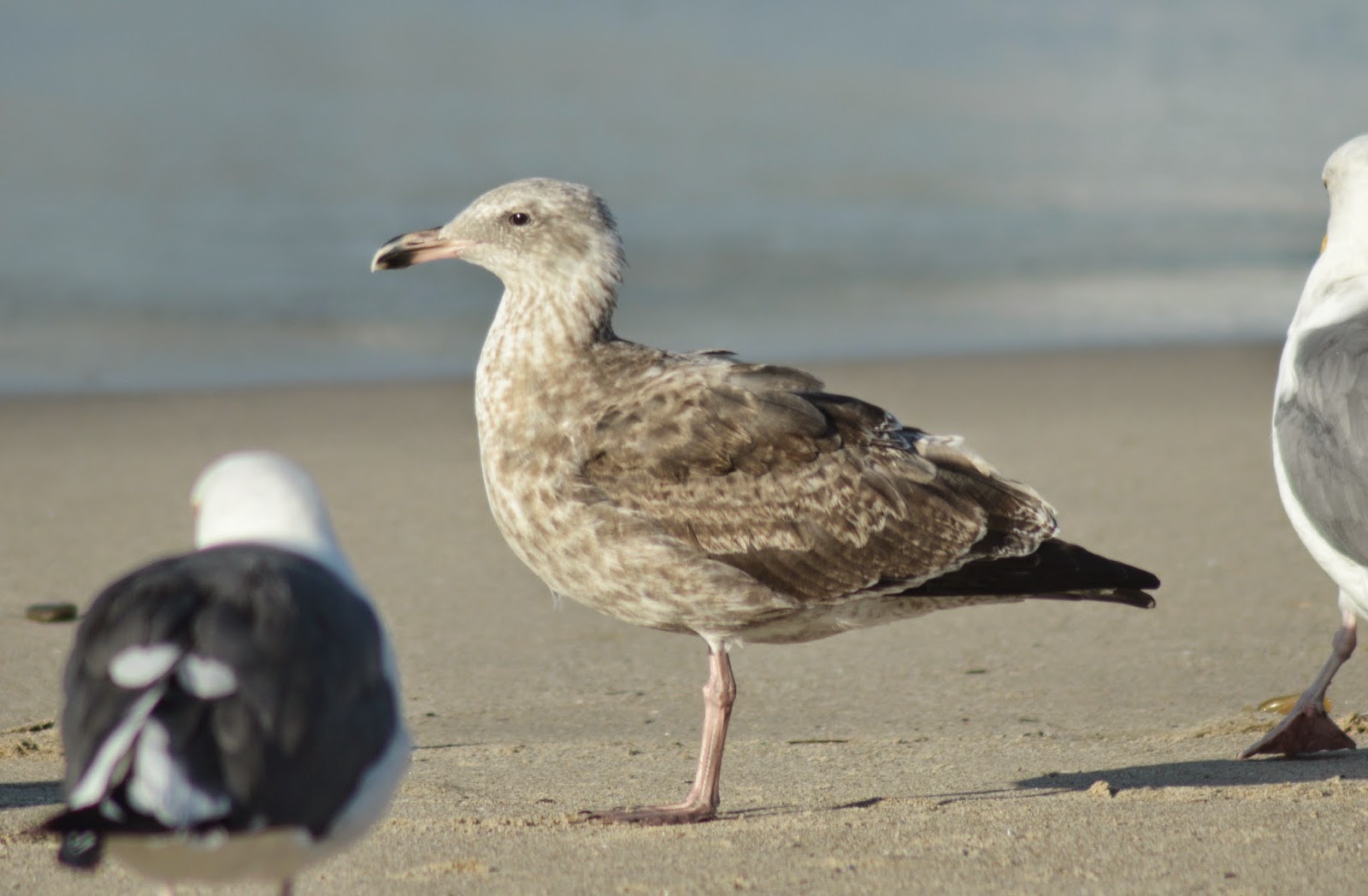
Western Gull
Allen's Hummingbird
Marbled Godwit
Snowy Plover
Pelagic Cormorant
California Sea Lion
Brown Pelican
Thank you America for the incredible experience!!!




.JPG)
.JPG)
